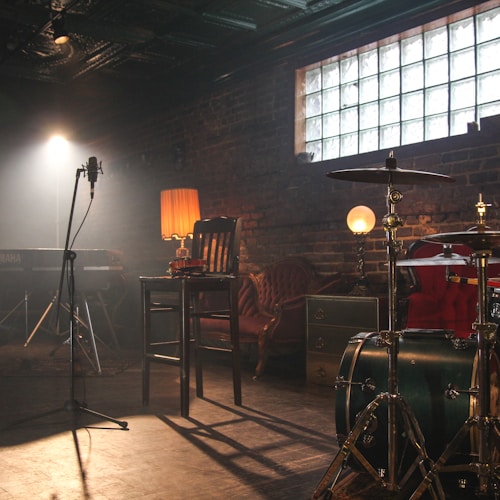
Five lessons from scoring my first documentary
Writing music for Beyond the Horizon taught me more in three months than a year of writing on my own.

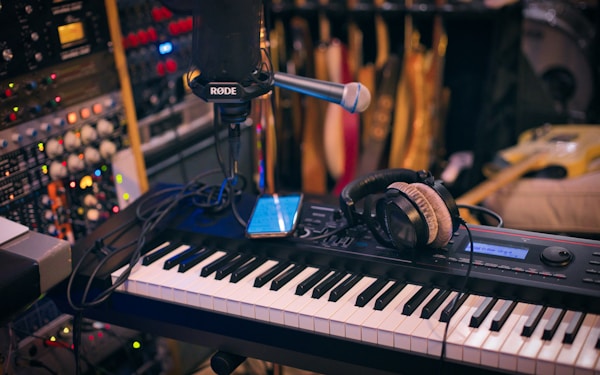
When the picture leads, every musical decision suddenly has a reason. There's nowhere to hide behind a nice chord progression: either the cue serves the scene or it doesn't. Here are the five things that stuck with me.
1. Silence is a cue too
Some of the most powerful moments in the film are the ones where I pulled the music out entirely. A sudden drop to room tone can hit harder than any swell. Learning to write less was the hardest and most valuable skill of the whole project.
2. Write to the edit, not the script
Scenes change in the cutting room. If you score to an early script or a rough assembly, you'll re-write everything twice. I learned to wait for a reasonably locked picture, and to build cues in a way that could stretch or shrink by a few seconds without falling apart.
3. Themes beat melodies
A small motif that recurs is worth more than ten beautiful one-off cues. Give the audience something to recognise and you can pay it off later with almost nothing — a single instrument, a changed harmony — and it lands.
4. Talk in feelings, not key signatures
Directors rarely think in music theory, and they shouldn't have to. When I stopped saying "let's go to the relative minor" and started saying "let's make this feel like the ground is giving way," the feedback loop got dramatically faster.
5. Deliver stems, always
The mix will change, and your future self will thank you for the flexibility.
Right up to the final dub, someone will want the strings up and the synth down in one specific scene. If you've delivered stems, that's a two-minute change. If you haven't, it's an evening.
You can hear the finished score on the Beyond the Horizon project page.